carp


Feb 23
2012

Kevin’s Carp Bugger Needs a Name

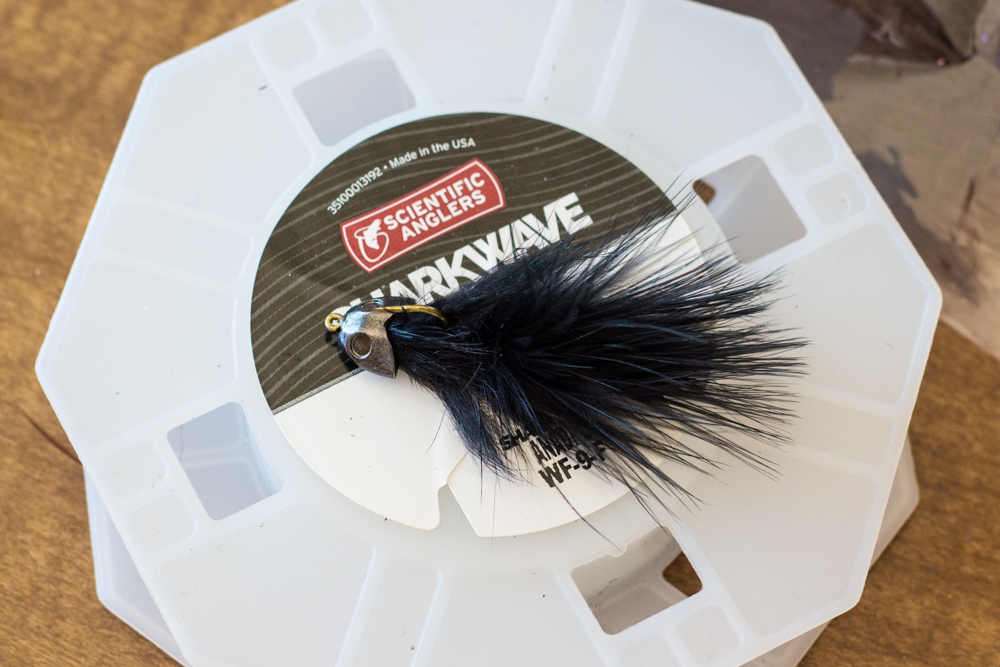
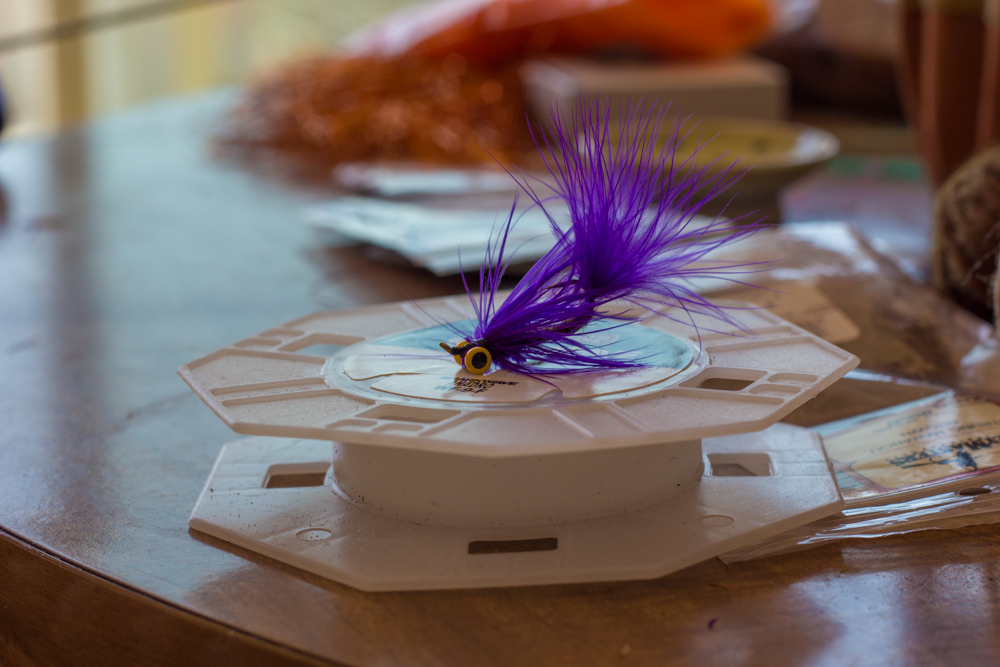
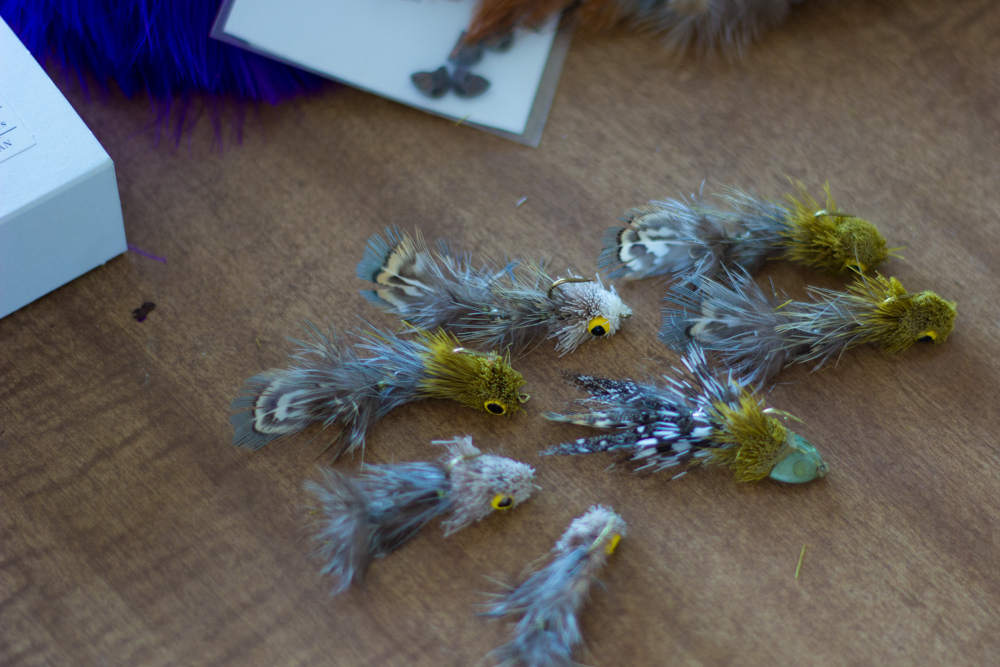
Kevin has a problem and needs a little help. When he started carp fishing many years, ago the advice was to throw brown or black Woolly Buggers. They worked well then and they still do now. But the standard Woolly Bugger has one critical design flaw for carp fishing in snaggy waters: it rides hook down and loves to hang up on everything.

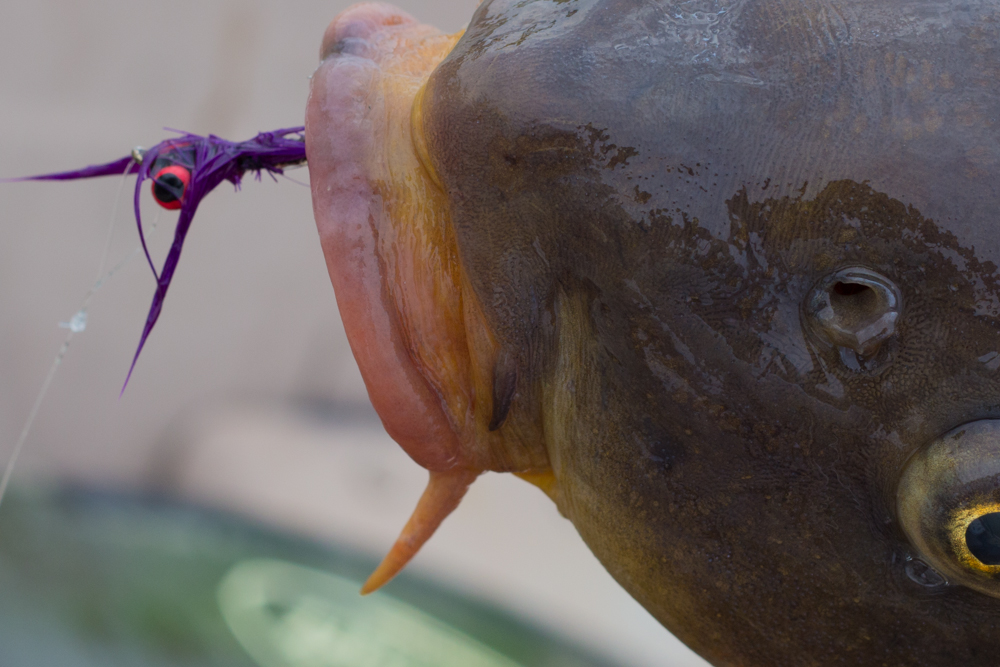
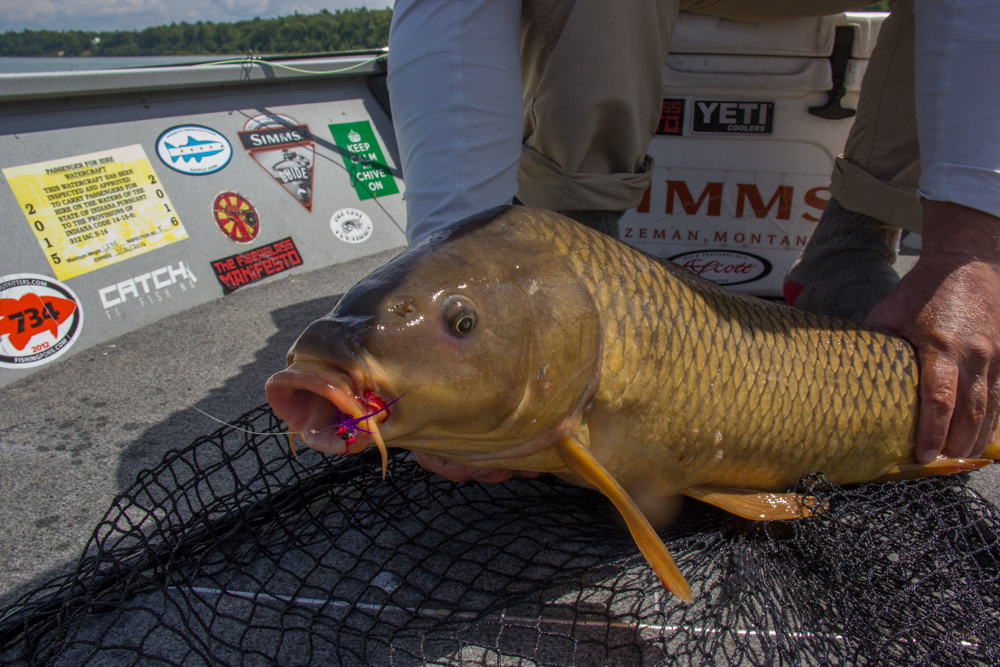
The simple way to overcome this problem is to add lead eyes and call it good. But lead eyes cause quite a splash when they land on the water and for slow moving fish in shallow water, flies with lead eyes will often spook them. Kevin overcame this problem by using a bent shaft TMC 200R hook and placing weight in the center of the bend. This, in conjunction with tying the tail well around the bend of the hook towards the point and trimming the hackle tight on the bottom of the fly, creates a keel effect and keeps the hook properly oriented. It lands on the water very softly, has a long hang time, will dance in their face with the slightest switch, and rarely snags bottom. In Kevin’s opinion, this bent design has a better look and action and entices more carp than the standard bugger, at least where he fishes.

The pattern has evolved over the past couple seasons into a couple specific color combinations, some with and some without rubber legs. As with many things, this pattern started out as a flipped Woolly Bugger and ended up being quite different.

While this has always been a standard in Kevin’s carp box, he never thought that it was very original and simply referred to it as the Carp Bugger. This fly now needs a name and in a quick Google search it appears that there are many carp buggers. Got any ideas or opinions?

These are some names the Indigo crew has thrown in the hat: Sneaky Bugger, Carp Snack, BICB (Beaver Island Carp Bugger), Flipped Bugger, Sneaky Snack, Wake-Up Call and Bacon Cheesebugger.

Leave your suggestions over on our Facebook page. Thanks for your help.

carp fly patterncarp fly pattern


Feb 15
2012

Getting Ready for a Great Lakes Carp Trip

Zino from California just booked his first Beaver Island trip and wants to be on his A-game when he gets to the island. In preparation, he emailed over a few good questions that I think would be helpful for anyone thinking about a carp trip to the Great Lakes .

Zino: I know you provide all the gear and flies, but I would like to bring one or two of my own rods. I was thinking a 7wt for the smallies and a 9wt for the carp. What do you think about those two setups?

Kevin: While the 7wt and 9wt combination will certainly work, I prefer an 8wt and 10wt. There are days when the combination of wind and heavy flies, even for smallies, make the 7wt more challenging than it’s worth. The 8wt will handle any light to moderate situations and then you have the big 10wt for the very biggest flies and most brutal wind.

Zino: I know it is important to be able to cast close to the carp. How close?

Kevin: There is no question that accuracy needs to be good, but we don’t actually want to cast close to the fish. Carp are spooky and they do not like the plunk of lead eyes too close to them.

On cruising fish, I have a 20/20 rule: I want to put the fly 20′ past the fish and also lead the fish by 20′. Twenty feet is a starting point. One should shorten up on slow and shallow fish and go longer when faced with fish that are fast and deep. We cast perpendicularly past the fish to not spook it, but also to allow the carp to change course and still have the chance at presenting to it. We lead the fish to also not spook it, but also to allow the fly enough time to sink to the bottom by the time the fish gets to it.

On tailing fish, we make a best guess on fish orientation, current, and depth to determine what angles to cast on and when to stop or slow the fly to allow it to sink. For tailing fish, the goal is to have the fly drop right under the carp’s face. Again, we over-cast and lead the fish to prevent it from spooking, but because tailing fish are moving much more slowly than cruising fish, both the absolute and relative amount of over-cast and lead need to be adjusted, oftentimes significantly, from the 20/20 rule.

Zino: I saw you in a video describing a Hula Hoop sized area and a dinner plate sized area. What do these refer to?

Kevin: This is referring to the strike zone. By strike zone, I mean the area in which a fly will get noticed by a carp. While I seem to use the above references a lot, I think a construction cone is a better visualization. If you put a construction cone on the end of a carp’s head, with the narrow end between their eyes, the area extending out, to roughly six feet at the extreme for cruising fish (it’s an adjustable construction cone), is where a fly will get noticed. For tailing fish, the cone is much smaller, maybe 12″ at the extreme. For tailing fish, the fly needs to be put pretty much right on their nose. There is a nice illustration in an article I did for In-Fisherman a few years ago which is reproduced below.

I always think of carp as nearly blind. They evolved to be opportunistic foragers in dirty water, not predators in the gin clear Great Lakes. They’re doing the best they can out here, but we do have to make it as easy for them as possible.

Zino: I’d like to practice casting to targets before the trip. What length leader and what size tippet do you normally use for carp?

Kevin: Very short and simple: 2-3′ of 20lb blood knotted to 2-4′ of 12lb. All leaders are fluorocarbon. We only go longer for two reasons. The first is the cursed flat, calm day, when the carp will spook more easily from line shadow. The second is for targeting deeper fish as the sink rate and absolute potential depth of your fly is ultimately determined by the length of your leader when using floating lines.

Zino: How heavy are your goby patterns and what size hook do you use on them?

Kevin: The heavier fly you practice with the better you will be. I recommend tying a 5″ bunny strip fly with large lead eyes, cut the hook off, and you’d have a safe Beaver Island practice fly (though the large lead eyes will still whack you so do be careful). Practicing in some stiff wind is highly recommended. All of my flies are tied on #4 hooks.

great lakes carp fishing


Jan 31
2012

Carp Fly swap

A few weeks ago Lonny from Colorado emailed about a Beaver Island carp trip, which he ultimately booked for July. In the email exchange he mentioned that he was doing this cool carp fly swap at the Fly-Carpin blog. Kevin checked it out and it did look cool with some big names and friends like Will Rice, Jean-Paul Lipton, John Montana, and Barry Reynolds involved (the carperati?). A few emails later and Kevin was invited to the party.

And check out this cool post over on Fly-Carpin’ about Morlock’s Bunny Craw.

carp fly pattern


Dec 14
2011

Fly Fishing the World Beaver Island teaser EDIT

Here’s a teaser for the Beaver Island episode of Fly Fishing the World. The upcoming air dates we know about are as follows: Fri 12/16 at 9am, and Sat 12/17 at 7:30PM (not AM). PLEASE NOTE CHANGE IN AIR TIME FOR SATURDAY 12/17.


Sep 05
2011

Carp Breakfast strikes again

Sure, it’s salmon season, but carp season isn’t over. We recently received an email from our friend Gary Krebs from the Tippecanoe Fly Fishers. You might remember Gary from a post in May, Gary and friends were slaying the carp in southern Lake Michigan on Kevin’s Carp Breakfast.

This email from Gary included a picture and story about his latest catch on the Carp Breakfast. Gary wrote: “Caught this monster asian ass carp, excuse me, grass carp, on, guess what, a Morlock Carp Breakfast!! Hahahahaha. 32 minutes to land him with an 8wt rod. He pulled our canoe up river with the anchor down several feet then would head down river. Man my arm was aching after that. What a great feeling. Thanks for such a great fly Kevin!”

As far as we know this is the first grass carp landed on the Breakfast.

In other Breakfast news, Rick Mikesell from Trout’s Fly Fishing shop in Denver listed the Breakfast as his favorite pattern for the recent TU Carp Slam tournament.

Tying directions for the Breakfast are on the Indigo site and the pattern is available for purchase through FlyMasters and FeatherCraft.

carp fly pattern